Practice Areas
New Jersey Tax Gifting: A Thanksgiving Reminder to Review Your Estate Plan
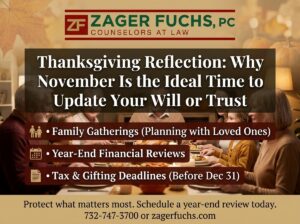 Thanksgiving brings families across Monmouth County and Central New Jersey together around the dinner table. Between catching up with relatives and looking ahead to the new year, the holiday season offers a natural opportunity to reflect on family priorities and financial planning.
It is also an ideal time to review your estate plan. Changes in family circumstances, financial goals, and tax laws can affect how your assets are protected and eventually transferred to loved ones. In particular, understanding New Jersey tax gifting rules and federal gift tax exclusions can help you make informed decisions about transferring wealth before the end of the year.
Here are three important areas to consider as you review your estate plan this November.
1. Put Family Gatherings to Meaningful Use
Seeing children, parents, and extended family members in person offers opportunities for conversations that rarely happen during everyday phone calls or visits.
Major life changes, such as a marriage, a new grandchild, a business transition, or a relative’s changing health, may signal that your estate planning documents need attention. These changes can affect the people you’ve named as executors, trustees, guardians, or beneficiaries.
Consider whether your existing will, trusts, powers of attorney, and healthcare directives still reflect your wishes. Open conversations about your plans can also help family members understand your intentions and reduce the potential for confusion or disputes during probate.
2. Understand New Jersey Tax Gifting Rules and Year-End Opportunities
Gifting can be an effective estate planning strategy for individuals who want to transfer wealth to children, grandchildren, or other loved ones during their lifetime. However, understanding the relationship between federal gift tax rules and New Jersey inheritance tax is important.
For 2026, the federal annual gift tax exclusion allows an individual to give up to $19,000 per recipient without using any of their lifetime federal gift and estate tax exemption. Married couples may be able to give a combined $38,000 per recipient, subject to applicable gift-splitting rules.
The federal lifetime gift and estate tax exemption is $15 million per individual in 2026. Gifts exceeding the annual exclusion generally count toward this lifetime exemption, although gift tax return filing requirements may apply even when no immediate gift tax is due.
New Jersey does not impose a separate state gift tax or an estate tax. However, its inheritance tax may apply to certain transfers depending on the relationship between the person making the transfer and the recipient.
There is also an important timing consideration: New Jersey generally presumes that gifts made within three years before death were made in contemplation of death, unless evidence establishes otherwise. Consequently, certain gifts may be included when determining New Jersey inheritance tax liability.
As December 31 approaches, reviewing potential gifts with an estate planning attorney can help you understand applicable exclusions, reporting requirements, and the potential tax consequences of transferring assets.
3. Align Beneficiary Designations, Wills, and Trusts
Year-end financial reviews are also a good opportunity to examine retirement accounts, life insurance policies, and investment accounts.
Make sure your beneficiary designations reflect your current wishes and coordinate with your overall estate plan. Assets with designated beneficiaries generally pass according to those designations rather than the instructions in your will. Similarly, assets held in a trust are distributed according to the trust’s terms.
An outdated beneficiary designation can create unintended consequences, even when your will or trust has been updated.
Reviewing these documents together can help ensure your estate plan reflects your current family circumstances, financial priorities, and long-term goals.
Make Estate Planning Part of Your Year-End Checklist
Estate planning is not a one-time task. It requires periodic attention as your family, finances, and applicable tax laws change.
For more than six decades, Zager Fuchs, P.C. has helped individuals, families, and businesses throughout New Jersey address their estate planning and legal needs with clarity and integrity.
Whether you are considering lifetime gifting, updating your will, or reviewing an existing trust, our Red Bank attorneys can help you understand your options.
Contact Andrew Krantz of Zager Fuchs, P.C. at 732-747-3700 to schedule an estate planning consultation before the year ends.